Tues: 8:30am - 3:00pm
Wed: 12:00pm - 6:00pm
Thurs: 8:30am - 3:00pm
Fri: Closed
Sat: 8:30am - 12:30pm
Sun: Closed
Greenvale, NY 11548
Discover Why Vietnam Has the Potential to Become a Football Powerhouse in the Future
Over the past decade, Vietnam has surprised many football fans in Asia with strong performances, disciplined play, and passionate support from millions at home. These changes aren’t temporary. They are the result of better training systems, smarter leadership, and steady investment. With clear progress on and off the field, Vietnam is building a solid path toward becoming a future football powerhouse.
A country that loves football
In Vietnam, football is part of everyday life. When the Vietnam national football team plays an important match, stadiums are full, and streets in Hanoi and Ho Chi Minh City are covered in red flags. After big wins, thousands of fans celebrate together late into the night.

All-night celebration
This strong public support creates pressure for improvement and gives players motivation to perform better. Many successful football nations have a similar culture where fans deeply connect with their teams. Vietnam already has this advantage. It is one important reason behind Vietnam’s growing impact on the game.
Positive results on the Asian stage
Vietnam’s progress can be measured by clear achievements. Under the guidance of Park Hang-seo, the team reached new heights. In 2018, the U23 squad advanced to the final of the AFC U23 Championship, defeating strong opponents such as Iraq and Qatar. That same year, Vietnam won the AFF Cup, ending a decade-long wait for the regional title.
At the AFC Asian Cup in 2019, Vietnam reached the quarter-finals and competed closely with higher-ranked teams. More importantly, the national team advanced to the final round of Asian qualifiers for the FIFA World Cup for the first time in history.
Building from the youth level
Sustainable success starts with young players. In recent years, Vietnam has expanded its football academies and training programs. Young athletes now receive structured coaching, physical conditioning, and tactical lessons from an early age.
The country’s top league, V.League 1, provides competitive matches that help players develop under real pressure. Clubs are also investing more in fitness centers, medical care, and modern training equipment. These improvements reduce injuries and raise performance standards.
Countries like Japan became strong in Asia by focusing on youth systems for many years. Vietnam is following a similar path. This systematic approach strengthens Vietnam’s growing impact on the game at its foundation.
Talented players with big ambitions and team spirit
Vietnam’s development has also produced skillful players. Some well-known examples are Nguyen Quang Hai, Nguyen Xuan Son, and Nguyen Dinh Bac. Their technical ability and calm finishing helped the team win important matches in regional and continental tournaments.

Nguyen Xuan Hai, a famous Vietnamese football player
More players are now exploring opportunities overseas, where competition is faster and more physical. This exposure improves their skills and mindset. When they return to represent the national team, they bring valuable international experience.
The new generation is also more professional. They focus on fitness, discipline, and teamwork. These qualities are necessary for any nation that wants to compete consistently against Asia’s top teams.
Team spirit is another good point. Vietnamese players emphasize unity and collective effort. They defend together, attack together, and support one another on the field. This kind of connection reduces individual mistakes and increases overall discipline. Football history shows that many successful teams, including smaller nations, achieved great results thanks to teamwork.
Economic growth and long-term investment
Vietnam’s expanding economy supports football development. As businesses grow, sponsorship increases. Companies invest in clubs, tournaments, and youth competitions. With better funding, teams can hire experienced coaches and upgrade facilities.
Improved infrastructure makes a clear difference. Quality stadiums, modern training grounds, and reliable medical systems create a professional environment. Over time, these conditions help players perform at a higher level.
In addition, digital media spreads Vietnamese football to wider audiences. Matches are shared online, attracting attention beyond Southeast Asia. This wider exposure strengthens Vietnam’s growing impact on the game and builds its international reputation.
Stronger management and international cooperation
The Vietnam Football Federation has become more active in recent years. The federation has organized more training courses for coaches and referees, helping them update their knowledge according to international standards. Better coaching education leads to better player development.
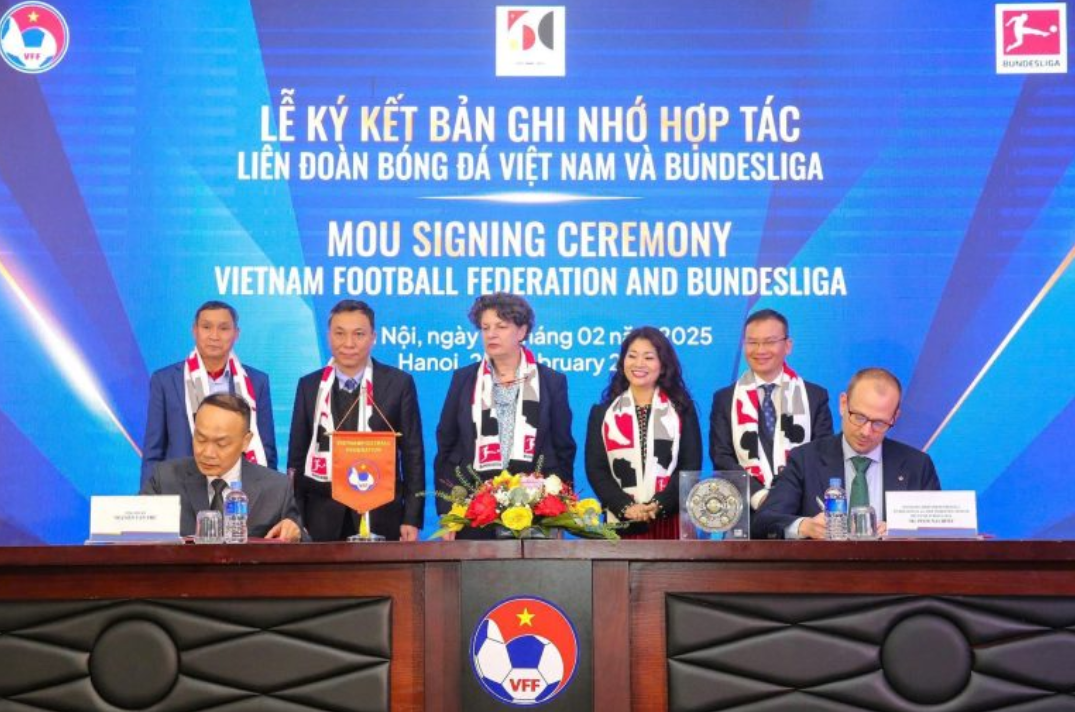
VFF to cooperate with the Bundesliga
Vietnam has also increased the number of friendly matches against stronger teams from Asia and beyond. Playing against high-level opponents exposes weaknesses and forces improvement. These matches provide real experience that can’t be gained from domestic competition alone.
In addition, cooperation with foreign experts has helped modernize training methods. Learning from countries with advanced football systems allows Vietnam to avoid common mistakes and develop more efficiently. Japan and South Korea followed similar strategies when building their football foundations.
Vietnam has proven that it can compete beyond regional tournaments. If development continues with the same focus and discipline, Vietnam has enough reason to believe it can become a football powerhouse in the years ahead.