Tues: 8:30am - 3:00pm
Wed: 12:00pm - 6:00pm
Thurs: 8:30am - 3:00pm
Fri: Closed
Sat: 8:30am - 12:30pm
Sun: Closed
Greenvale, NY 11548
Mobile proxies for stable app testing and account management
Stable mobile IPs support controlled app workflows. This article explains how mobile proxies help teams test apps, manage accounts, and compare real mobile access conditions. For projects that depend on authentic carrier based connections, INSOCKS mobile proxy can support smoother checks across regions, devices, and user scenarios ✨.
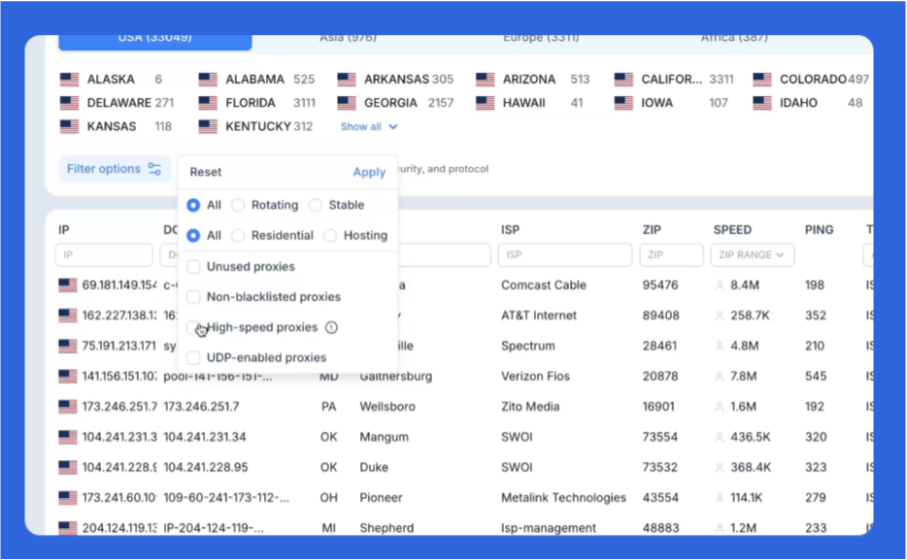
Why mobile proxies matter for app testing
Mobile apps often behave differently from desktop websites. They can change content, verification steps, prices, ads, language, or access rules depending on network type and location. Mobile proxies help testers see these differences through mobile IPs, which makes quality checks closer to real user activity.
Main testing advantages
A stable mobile proxy setup helps reduce false errors during repeated checks. It also allows teams to test onboarding, account recovery, ad display, payment flow visibility, and regional app screens. This is useful for development teams, marketing specialists, QA departments, and account managers ✨.
- ✅ Test app behavior in target regions
- ✅ Review mobile only content and offers
- ✅ Check account access under stable conditions
- ❌ Do not mix too many locations in one test
Comparison with desktop proxy testing
Desktop proxy testing is useful for websites, dashboards, and browser based platforms. Mobile proxy testing is better for apps, mobile ads, social platforms, and services that rely on carrier traffic. The key difference is that mobile proxies help simulate a mobile network environment, while desktop proxies usually reflect fixed broadband or datacenter based access.
- ✅ Desktop proxies fit web page audits
- ✅ Mobile proxies fit app and account workflows
- ❌ Desktop logic should not replace mobile testing
Statistics from a sample testing workflow
A structured mobile testing process becomes clearer when results are measured. The table below shows sample statistics from a controlled app testing workflow, where one team checked app access, screen consistency, and account stability across several regions.
| Testing metric | Sample result | Meaning |
|---|---|---|
| Regions tested | 6 | Wider mobile market coverage |
| App sessions reviewed | 120 | Stronger behavior comparison |
| Login issues found | 9 | Problems needing verification |
| Screen variations detected | 18 | Localized app differences |
| Retest success rate | 94 percent | Stable repeat check quality |
Case study for account management
A digital marketing team managed several regional app accounts for campaign monitoring. Before using mobile proxies, the team saw frequent verification prompts and inconsistent screen views. After separating accounts by region and using stable mobile sessions, checks became more predictable, and reporting improved ✨.
Information block for safer workflows
- ✅ Assign one account group to one region.
- ✅ Keep records of IP type, test time, device, and app version.
- ✅ Run a small pilot before scaling account activity.
- ❌ Avoid sudden switching between distant regions.
- ❌ Do not ignore repeated verification warnings.
Practical workflow guide
Start with a clear goal, such as testing login stability or checking localized ads. Select target regions, prepare test accounts, configure mobile proxy access, then run a short validation session. After that, collect screenshots, error logs, and timing notes before expanding the workflow.
Stable mobile operations
Mobile proxies support better app testing because they help teams work with more realistic mobile access conditions. They also make account management easier when tasks require regional separation, session discipline, and repeated checks. With careful planning, mobile proxy workflows can reduce confusion and improve operational control ✨.